Focus Group Discussion: A Way to Inspire Teachers to Create Real Future Leaders
A collaborative discussion space between GenZ and educators to break the chain of structural poverty through adaptive educational approaches and future planning for students.
5 min(s) read
•
August 30, 2026
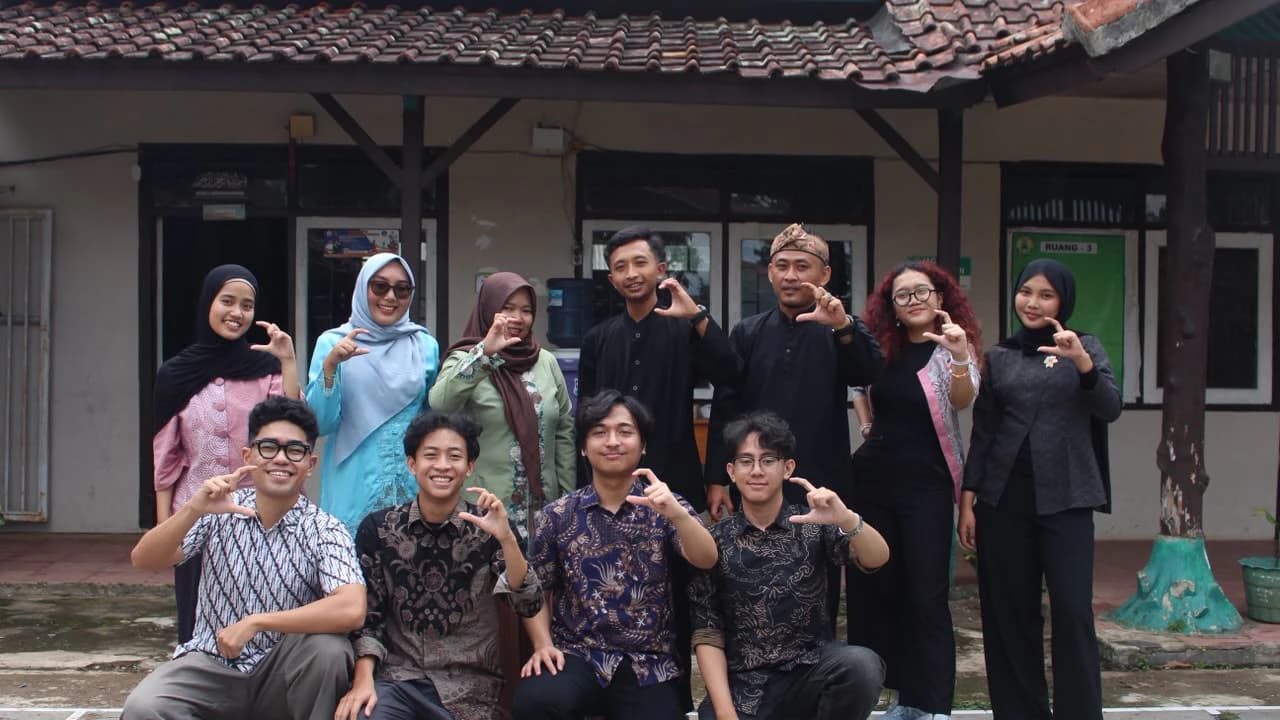
After seeking the root cause of the problem in the previous social mapping activity, the community project returned to work and serve by striving to solve existing problems in the field through providing a solution. In May 2026, the SatuEdu team held a discussion with teachers at SMA Al-Mukhlis, Bandung Regency. This discussion activity was conducted by SatuEdu alongside a previously designed module. The choice of this discussion method was because SatuEdu hoped that this activity could impart new knowledge not only to the local teachers, but also to us, Generation Z members who are still pursuing our education.
We named this discussion module the teacher training module. Each school has its own module design, and for SMA Al-Mukhlis, we titled it "Breaking the Chain of Structural Poverty through Education and Life Planning." In the module, we presented facts wrapped in a story that the most important assistance for poor communities is not money, but knowledge that can serve as a provision for them to truly break free from the ongoing cycle of poverty. With open access to education, these underprivileged students will gain access to a wider world, a world that offers many opportunities.
This module-based discussion also contains inspiring ideas or ways for teachers to deliver material on structural poverty using applicable methods that align with the students' world today. The SatuEdu team provided inspiration on how information regarding university and the future can be truly introduced to students, providing students with an idea of the opportunities that become wider if they pursue college instead of immediately working after graduating high school, and offering real family financial scenarios to give students a picture of how economically difficult it is to immediately work and get married after graduating high school.
Report
Initial Interaction
Upon arriving at SMA Al-Mukhlis, the SatuEdu team was welcomed by a teacher who then directed us to the teachers' room. There were already several teachers waiting for our arrival. At the beginning of the discussion, four teachers were present, consisting of two male teachers and two female teachers. The initial atmosphere was still quite formal as we did not know each other very well yet, so we began by introducing ourselves and briefly explaining the purpose of SatuEdu's visit.
After the atmosphere began to warm up, the discussion was opened with the presentation of the analysis results we had previously conducted regarding current educational conditions and potential problems faced by students. We tried not only to bring materials, but also to invite the teachers to re-examine the students' conditions from their perspective as educators.
Initially, the interaction proceeded rather cautiously. One of the teachers mostly conveyed various achievements accomplished by the school and showed that the school had actually made many efforts to develop its students. This became an important perspective for us because it showed that school conditions cannot be viewed solely from social mapping results or from outside the school. On the other hand, we also experienced quite a bit of difficulty digging into deeper issues because the discussion repeatedly returned to the achievements and positive things the school had done.
In the middle of the discussion, another teacher arrived and joined in. Their presence actually led the discussion to develop in a more open direction. They were willing to describe the condition of the students more candidly, including various efforts that had actually been made by the school but had not yet produced the expected results. From that point, the conversation felt more like an exchange of experiences rather than merely a delivery of material from SatuEdu to the teachers.
For us, this initial interaction served as a reminder that when carrying out community service, we cannot consider mapping results from the outside as a picture that fully represents the school's true conditions. Teachers have direct experience that is much closer to the students, making listening to their perspectives an important part of the process to understand the real issues.
Series of Activities
The discussion began by addressing current educational conditions, especially regarding the urgency of education as well as the challenges faced by students in determining their futures. We tried to open the conversation with topics close to the students' lives, such as post-high school choices, family economic conditions, the desire to work immediately, and the decision to marry at a young age.
One of the things we discussed was the dilemma that might arise when a student compares the option of working immediately with continuing education to higher education. From the student's perspective, going to college can feel like losing the opportunity to earn an income for several years. Meanwhile, a friend who chooses to work is already earning an income while they are still in college. This mindset is one of the reasons why higher education sometimes feels less appealing to students coming from families with limited economic conditions.
We then linked that issue to the concept of structural poverty contained in the module. We tried to show that education is not merely about getting a diploma or a job, but also about opening someone's access to more choices and opportunities in the future. To help teachers convey this to students, we discussed several more applicable approaches, such as providing a realistic picture of family financial conditions, comparing various post-high school options, and encouraging students to draft their own life plans.
The discussion then developed based on the teachers' experiences. One teacher conveyed that some efforts to prevent students from making certain decisions had actually been carried out by the school, but the results were not yet in line with expectations. That subsequently created room for us to share perspectives from our own experiences when we were students. We tried to re-imagine how advice from a teacher can be received by students, what makes students willing to listen, and what kind of approaches actually make them feel lectured.
From that discussion, a challenge quite relevant to current student conditions emerged: the influence of social media, particularly TikTok. The teacher mentioned that students today can easily obtain various information and opinions from social media. As a result, students sometimes find it easier to question or refute the advice given by teachers because they already have other references from the internet. This made us realize that the challenge in education today is not only about how teachers convey information, but also how teachers can deliver that information in a way that aligns with the students' world.
The subsequent discussion continued to refer to the prepared handout, but did not proceed in a rigid manner. We adjusted the material according to the stories and experiences shared by the teachers. Thus, the module served more as a conversation starter rather than merely material that had to be delivered one-way.
Discussion Progress
As the discussion progressed, the conversation became increasingly open. The differing perspectives that emerged among the teachers actually became an interesting part of this activity. We realized that not everyone views school conditions in the same way. Some emphasized achievements and various things the school had successfully accomplished, while others were more open to discussing the challenges students still face.
The teacher who newly joined the discussion became one of the parties who initiated much of the talk regarding the real conditions of the students. They explained that several approaches we offered had actually been carried out by the school, but had not yet yielded maximum results. They then asked what could be done further. That question made the discussion more two-way, as we were no longer just explaining the ideas in the module, but also trying to find alternatives based on our experience as university students who had once been in the students' position.
We also observed that the teacher had quite a good closeness with the students. The way they spoke about the students felt more personal because it involved not only academic achievements, but also behavior, mindsets, and the students' daily lives. From this, we learned that closeness between teachers and students can be an important asset in delivering education on personal matters, such as future planning, family economic conditions, college vs. work choices, and marriage.
The discussion on early marriage also formed part of the conversation. The teachers mentioned that so far, there were no students at the school engaging in early marriage. However, the phenomenon remains real in the environment surrounding the school. This made us realize that the absence of cases within the school does not mean the issue is irrelevant to discuss. Education regarding life planning, the consequences of deciding to marry at a young age, and the importance of preparing for education and the future can still serve as valuable knowledge for students.
Toward the end of the discussion, an idea emerged regarding the importance of bringing in alumni as real-life examples for students. The teachers and the SatuEdu team saw that students might find it easier to envision their future if they meet directly with someone who was once in the same position. SMA Al-Mukhlis alumni who later went on to college and built careers could serve as examples that a school background does not have to be a boundary to having broader ambitions. A sharing session with alumni subsequently became one of the ideas that we felt was realistic for the school to develop in the future.
In the end, this discussion did not yield a single answer on how to solve all educational issues in the school. However, it was precisely through this process of exchanging perspectives that we gained the understanding that educational solutions need to continually adapt to student characters and changing times. Teachers are required not only to possess knowledge, but also to understand how students obtain information, how they think, and the best ways to make educational messages truly reach them.
Lesson Learned
Through this Mini Project 1, we learned that social mapping results do not necessarily represent the real conditions occurring within the school. Therefore, a two-way dialogue like this can serve as a more comprehensive step toward achieving our main goal: helping to provide equitable education for all parties. It is precisely the synergy between the minds of Gen Z youth and educators in the field that enables the creation of educational solutions that are not only relevant and adaptive, but can also reach the mindsets and needs of students, which are becoming increasingly unpredictable in the future.
Written by Christiano Rudolfo Leluly and Raifa Putra Wiguna